
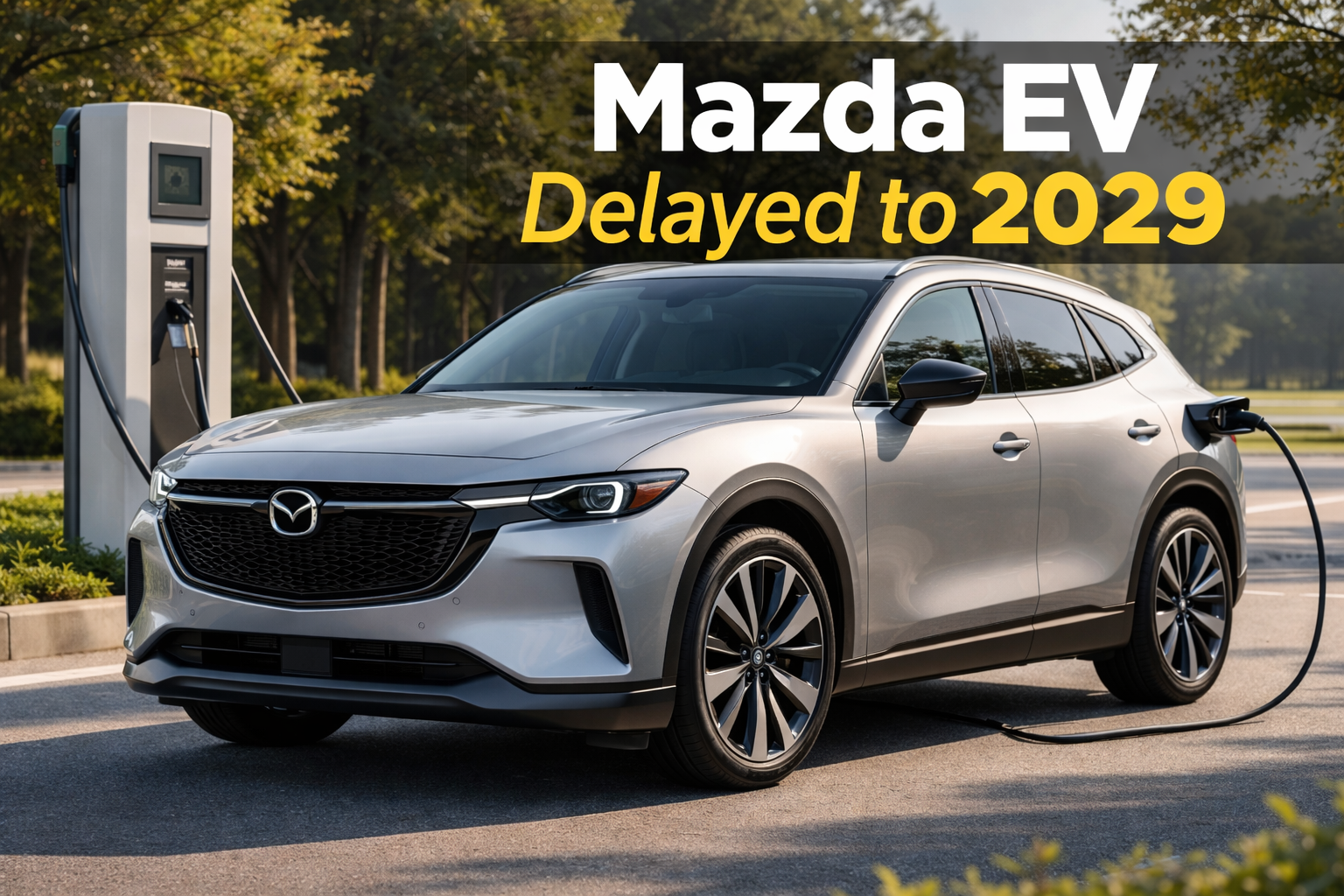
Mazda has officially become part of a growing trend in the American auto industry. The Japanese carmaker has delayed its next major electric vehicle (EV) launch to 2029, moving away from its earlier timeline. This decision has sparked fresh Mazda EV news across the USA, especially among buyers who are closely watching the future of electric cars.
Instead of rushing into the EV race, Mazda is choosing a smart and strategic path, focusing on quality, reliability, and long-term value for American drivers.
Let’s understand why the Mazda EV delay happened, what it means for the Mazda electric car USA market, and how this move shapes the Mazda future EV strategy.
Quick Overview of Mazda’s EV Delay
- Mazda’s next all-new electric vehicle is now planned for 2029
- Earlier expected launch: 2027
- Main focus until then: Hybrid and efficient gas models
- Market focus: United States and global markets
This move reflects changing demand in the U.S., where many buyers are still choosing hybrids over full EVs.
Launch Timeline: Original vs Delayed
| Detail | Information |
|---|---|
| Original Expected Launch | 2027 |
| New Delayed Launch Date | 2029 |
| Announcement Period | 2025–2026 |
| Target Market | USA & Global |
| Vehicle Type | Next-gen Electric SUV / Car |
Mazda believes that waiting longer will help them deliver a better, more advanced EV that fits American roads, lifestyles, and charging infrastructure.
Expected Price in the USA
Mazda has announced the price based on market trends and current Mazda models:
- Expected Starting Price:
$40,000 – $45,000 (USD) - Positioned against:
- Tesla Model Y
- Ford Mustang Mach-E
- Hyundai Ioniq 5
Mazda aims to offer a premium feel at a competitive price, which is why extra development time is critical.
Why Mazda Delayed Its Next EV – Key Reasons
Mazda’s decision is not a weakness. It is a calculated move based on real U.S. market conditions.
Slower EV Demand Growth in the USA
- EV adoption is growing, but not as fast as expected
- Many American buyers still worry about:
- Charging availability
- Battery life
- Cold-weather performance
Strong Shift Toward Hybrids
Mazda sees strong demand for hybrids in the U.S.
This supports its Mazda hybrid strategy, which includes:
- Better fuel efficiency
- Lower emissions
- No charging anxiety
Cost & Profit Challenges
- EVs are expensive to develop
- Battery costs remain high
- Mazda wants to protect pricing for U.S. buyers
Technology Improvement
Mazda wants:
- Longer driving range
- Faster charging
- Better battery durability
Waiting until 2029 allows Mazda to launch an EV that feels complete and future-ready.
Mazda’s Current EV & Hybrid Direction in the USA
While waiting for its next EV, Mazda is not standing still.
Mazda’s Focus Areas Until 2029:
- Expanding hybrid models
- Improving fuel-efficient engines
- Preparing flexible EV platforms
This balanced approach keeps Mazda competitive in the Mazda electric car USA conversation.
Latest Mazda EV News – What’s Happening Now?
Here’s what American buyers should know:
- Mazda will not rush into mass EV production
- Hybrids will dominate Mazda’s U.S. lineup short-term
- The delayed EV will be more advanced and refined
- Mazda is learning from competitors’ EV mistakes
This makes Mazda’s move one of the most thoughtful strategies in current Mazda EV news.

What to Expect from Mazda’s Future EV (2029)
Mazda’s upcoming EV is expected to offer:
- Long driving range (300+ miles estimated)
- Fast-charging support
- Premium interior quality
- Smooth and quiet driving
- Strong safety and tech features
Mazda wants its future EV to feel different, not rushed or outdated.
Why This Decision Makes Sense for the USA Market
The American auto market is unique.
Key U.S. Buyer Preferences:
- Practical vehicles
- Strong resale value
- Reliable performance
- Flexible fueling options
Mazda understands that hybrids currently fit the U.S. mindset better than full EVs, making this delay a smart adjustment rather than a setback.
Pros and Cons of Mazda’s EV Delay
Pros
- Better final product
- Lower risk for buyers
- More advanced technology
- Competitive pricing
Cons
- Slower EV presence
- Fewer choices for EV-only buyers
- Increased competition by 2029
Still, for long-term success, the benefits outweigh the risks.

Final Thoughts: Is Mazda’s EV Delay a Smart Move?
Yes – for the U.S. market, Mazda’s decision looks smart and realistic.
The Mazda EV delay shows that the company values quality over speed. Instead of launching an average electric car, Mazda is choosing to deliver a strong, reliable, and competitive EV in 2029.
With a clear Mazda hybrid strategy, steady planning, and customer-focused thinking, Mazda’s future EV could arrive at the perfect time for American drivers.
Sometimes, waiting longer leads to a better road ahead
FAQ’s
Why did Mazda delay its next electric vehicle to 2029?
Mazda delayed its next EV to 2029 due to slower EV demand growth in the USA, high battery costs, and a stronger focus on hybrids. The company wants to launch a more advanced and reliable electric vehicle instead of rushing production.
What was the original launch date of Mazda’s next EV?
Mazda’s next electric car was originally expected to launch around 2027, but the company has now officially postponed it to 2029.
What is the expected price of Mazda’s future EV in the USA?
The upcoming Mazda electric car is expected to be priced between $40,000 and $45,000 in the U.S. market, placing it in competition with Tesla Model Y and Ford Mustang Mach-E.
Is Mazda still selling electric cars in the USA?
Yes, Mazda continues to sell electric and electrified vehicles in the USA, but its main focus right now is on hybrid models while preparing for its next full EV launch.
Will Mazda’s delayed EV be better than current electric cars?
Mazda aims to make its 2029 EV more competitive with longer range, faster charging, improved battery life, and premium features, making the delay beneficial for future buyers.