UGC New Act 2026 and UGC bill mark a major milestone in India’s ongoing efforts to strengthen fairness, equality, and inclusivity in higher education. With the UGC Act 2026 latest update, the University Grants Commission has introduced profound reforms aimed at eliminating discrimination and fostering equal opportunity on campuses across the nation. What’s especially remarkable is how these changes in UGC New Act come in response to the voices and demands of student groups and civil society — a testament to democratic engagement and educational reform.
What Is the New UGC Bill 2026 All About?
The UGC bill 2026 represents a refreshed regulatory framework under the UGC aimed at institutionalising equity and fairness in Indian universities and colleges. Officially notified in January 2026, the new UGC Act 2026 replaces parts of the earlier anti-discrimination rules and sets clearer, stronger norms to prevent unfair treatment based on caste, religion, gender, disability, and other grounds.
The heart of this reform lies in the UGC New Act 2026 latest news — its focus on equity, inclusion, and structured grievance redressal — ensuring that higher education becomes truly accessible and respectful for students from all walks of life.
Equality at the Core: How the UGC New Act 2026 Works
A. Mandatory Equal Opportunity Centres (EOCs)
Under the new UGC Act 2026, every university and college must establish an Equal Opportunity Centre. These centres are responsible for:
- Receiving and documenting complaints of discrimination
- Promoting awareness of equity issues
- Supporting students facing discriminatory experiences
This proactive step ensures that equality isn’t just a concept — it’s an active, supported reality on campuses.

B. Formation of Equity Committees
Each Equal Opportunity Centre must have an Equity Committee, which includes representation from diverse groups including Scheduled Castes (SC), Scheduled Tribes (ST), Other Backward Classes (OBC), women, and persons with disabilities. Chairs of these committees guide investigations, issue recommendations, and promote inclusive campus standards.
This structured representation ensures voices from historically marginalised communities are part of the governance process — a big leap forward in educational fairness.
C. Expanded Definition of Discrimination
The UGC Act 2026 latest update expands the notion of discrimination beyond just caste to explicitly include religion, gender, disability, place of birth, and more. This broader understanding helps institutions protect students in many more real-world situations and contexts.
Protests, Public Response, and Democratic Dialogue
Not all voices welcomed the changes immediately — and that’s an important part of how change happens in a healthy democracy.

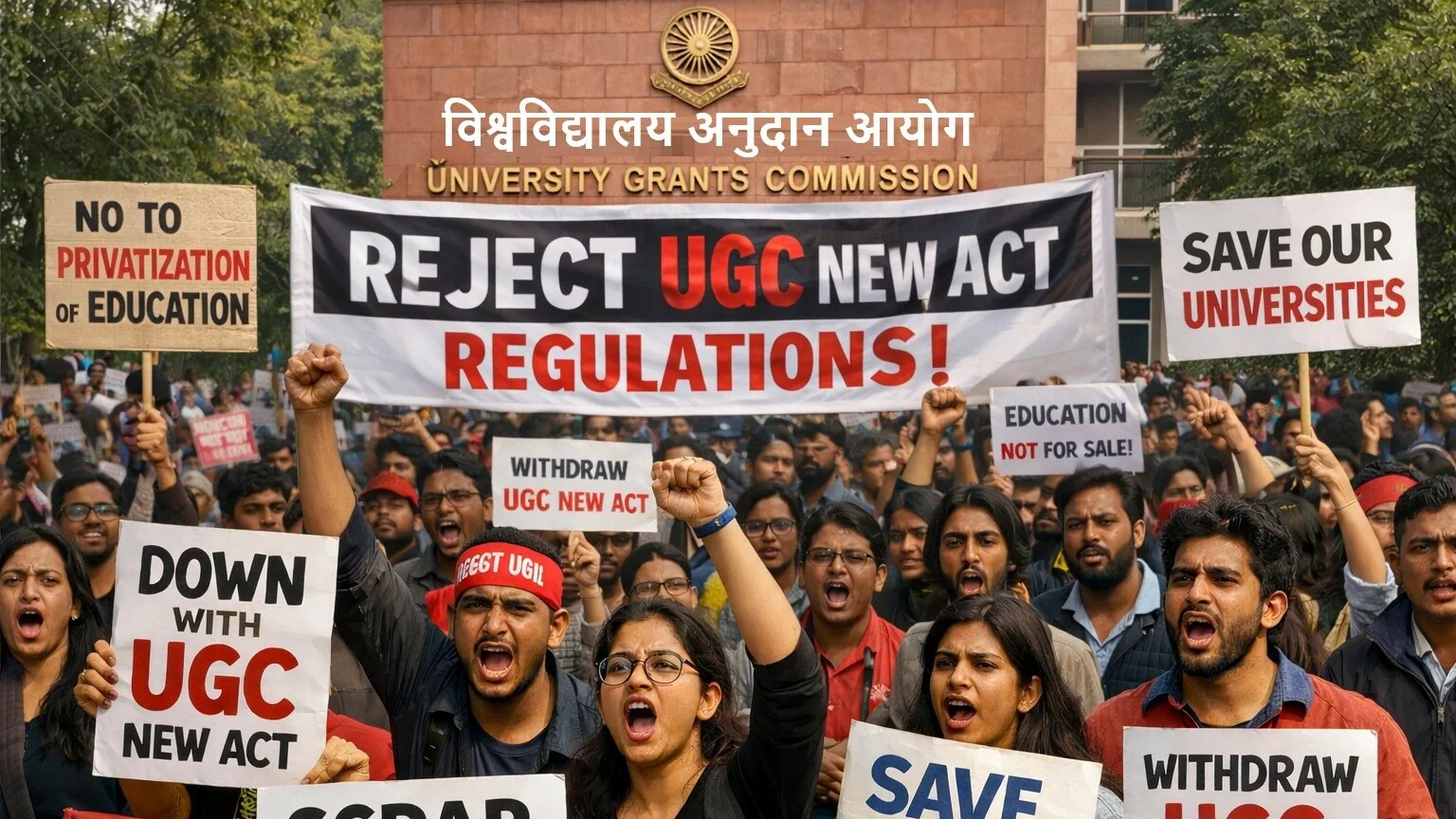
Several student groups, particularly from general or unreserved categories, raised concerns over interpretations of the new rules and potential gaps in grievance redressal for all groups. Protests took place at the UGC headquarters, and some campus unions expressed the need for clearer procedural safeguards.
This public response played a powerful role in shaping the narrative around the new UGC bill, ensuring that the reform reflects not just policy goals but the lived experiences and concerns of students nationwide.
Government Clarifications: Safe, Fair, and Balanced
In response to public debate and protest, Union Education Minister Dharmendra Pradhan highlighted that the UGC New Act 2026 will be implemented within the constitutional framework and under judicial oversight, ensuring no category faces discrimination or unfair treatment.
He emphasised that these measures are about fostering inclusion, not dividing students — an encouraging message for students, teachers, and families who want education systems that are equitable and empowering.

Why This Matters: Equity, Opportunity, and a Positive Turn
Here’s why the changes in UGC New Act are so significant — and why they are being seen as a positive turning point:
Institutionalised Fairness
For the first time, equity is not just an ideal — it’s a structural requirement, backed by regulation. The presence of EOCs, committees, and reporting mechanisms ensures that no discrimination claim goes unheard.
Inclusive Governance
The UGC New Act 2026 explained clearly lays out that stakeholders from marginalised communities have a stake in decision-making. This broadens the perspective of campus policy and brings diverse voices into leadership roles.
Enhanced Support for Students
The appointment of equity ambassadors, helplines, and monitoring help students feel protected and supported. This is especially crucial for students who have historically faced bias or exclusion in higher education.

A Democratic Win
When students and academic communities voiced their opinions — through protests, discussions, and media engagement — they helped elevate the conversation around equity. The fact that these dialogues influenced public policy reflects a healthy democratic ethos in India’s education landscape.
Looking Forward: A Stronger, Fairer Education System
As the UGC Act 2026 latest update continues to unfold, institutions must adapt and implement these changes with integrity, transparency, and a commitment to equity. Resistance and debate, when guided by respect and facts, strengthen systems — and in this case, have helped shape a new UGC Bill 2026 that is more comprehensive, inclusive, and student-centric.
Ultimately, these big changes in UGC New Act 2026 signal a brighter future for Indian higher education — one where diversity is protected, equality is enforced, and every student can pursue their academic journey with confidence and dignity.
Summary
Equality in education is not just policy — it’s principle.

The UGC New Act 2026 explained shows us that progress doesn’t happen in silence. It happens through dialogue, inclusivity, and the courage of communities to speak up for a fairer tomorrow.
If you’re a student, educator, or parent, this moment is historic — and it’s one worth watching, learning from, and participating in.